

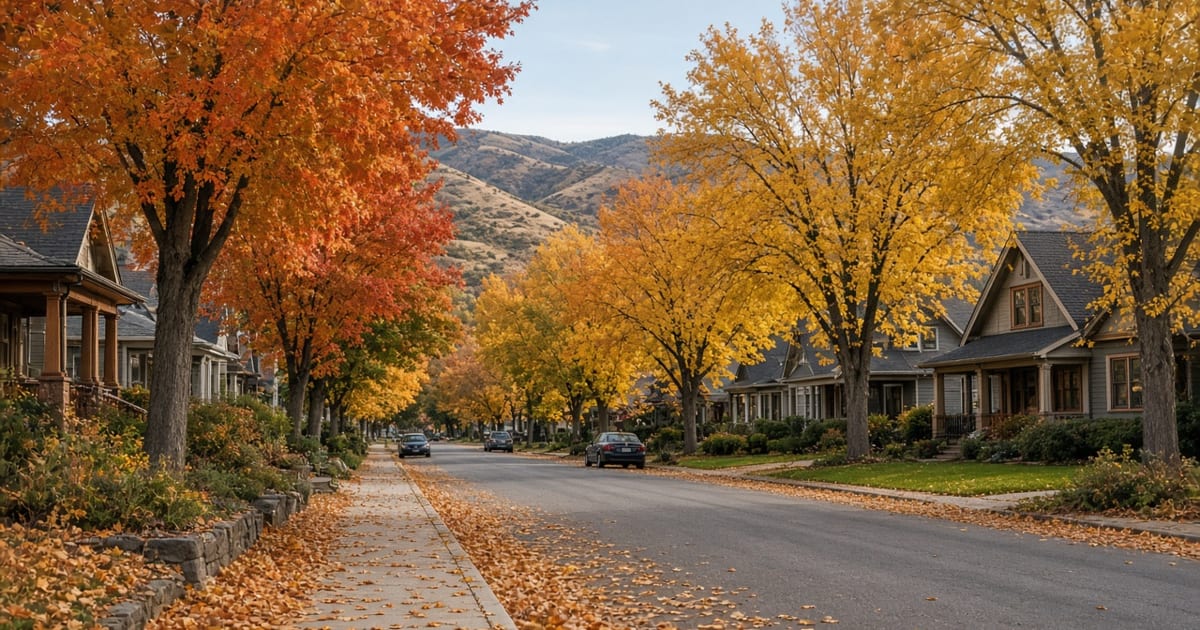

October in the Treasure Valley has a way of making a house feel like home — the trees along the Greenbelt turning gold, the first cold mornings in the foothills, and that pull to be settled somewhere warm before the holidays. For buyers, it is also a season that changes what you can see, test, and verify about a home before you commit to it. A house that shows beautifully on a sunny October afternoon still has to perform during a January inversion and a February cold snap.
Here is what deserves your closest attention when buying a home in Boise this fall.
Why Buying a Home in Boise This Fall Is Different
Fall buying in the Treasure Valley comes with a timing quirk most buyers never think about: several of a home’s most important systems are switching from summer mode to winter mode, sometimes right in the middle of your inspection period. Irrigation water shuts off, sprinkler systems get winterized, air conditioners go idle, and furnaces take over. Each of those transitions creates a window in which a system can be tested — and a point after which it cannot.
The buyers who navigate this well are not the ones who skip inspections or rush through them. They are the ones who understand the seasonal calendar and build it into their offer, their inspection plan, and their negotiation.
Irrigation and Sprinklers: Test Them While You Can
Know who actually delivers the water
Many Treasure Valley homes water their yards with surface water delivered through irrigation districts and canal companies — not the city water that comes out of the kitchen faucet. Those providers run on their own schedules, and the season ends in the fall. For 2026, the City of Meridian announced that the Nampa & Meridian, Pioneer, and Boise-Kuna irrigation districts shut down on September 28, with Settlers Irrigation District tentatively ending October 9, as reported by BoiseDev. Other districts and HOA-managed pressure systems follow their own calendars.
What to ask for if the water is already off
If the irrigation water is off by the time your inspection happens, the sprinkler system usually cannot be fully run and tested. In that case, ask the seller for written information on the system’s condition and any recent repairs, who supplies the water, what the annual assessment runs, and whether the system has been professionally blown out for winter. A sprinkler line that freezes with water still in it can crack — and nobody finds out until the water comes back on in the spring.
Radon Testing Belongs on Every Boise Inspection
Radon is a naturally occurring, odorless gas that can seep into homes through the foundation, and it is a real consideration across Idaho. According to the Idaho Department of Health and Welfare, two out of five Idaho homes have elevated radon levels, and the department notes that high levels have been found in every county in the state — in new construction and homes without basements, too. The EPA recommends taking action at 4.0 pCi/L or higher.
The good news is that testing is simple and inexpensive, and the state specifically recommends asking for a radon test during the home inspection. If the results come back high, a mitigation system is a common, well-understood fix that buyers can negotiate into the deal. The department also notes that short-term radon tests are best done in winter, when homes are closed up — which makes the fall and winter buying season a natural time to test.
Heating, Insulation, and the Rest of the Winter Checklist
Furnaces, heat pumps, and fireplaces
The furnace is about to become the most important system in the house. Ask your inspector to run the heat, note the age and condition of the furnace or heat pump, and request any service records the seller has. If the home has a wood stove or wood-burning fireplace, have it evaluated as well, and ask about local air quality rules — wood burning can be restricted on poor air quality days during winter inversions.
Roof, gutters, and attic insulation
Snow and freeze-thaw cycles test a roof very differently than summer sun does. Have the inspector look closely at flashing, shingles, and gutters, and check the attic for adequate insulation and ventilation. Poor insulation means higher heating bills, and it can contribute to ice buildup along the eaves on the coldest mornings.
Plumbing, hose bibs, and crawl spaces
Look for frost-free hose bibs, insulated pipes in crawl spaces and exterior walls, and any evidence of past freeze damage. Older homes in neighborhoods like the North End, the East End, and the Boise Bench often have character to spare — along with plumbing and crawl spaces that deserve a closer look.
Use the Season to Your Advantage in Negotiations
Fall inspections often turn up items tied directly to the season — a sprinkler system that cannot be tested, a furnace overdue for service, a radon result that calls for mitigation. Each of these gives buyers a clear, reasonable basis to request repairs, credits, or a holdback at closing. Sellers who want to close before the holidays are frequently willing to work through those requests rather than start over in December.
The key is planning early. Build radon testing and any specialized inspections — sewer scope, chimney, or HVAC — into your inspection period from the start, rather than discovering you need them after the deadline has passed.
Your Fall Buyer’s Inspection Checklist
· Confirm the irrigation provider, assessment, and whether the system has been winterized
· Request a radon test as part of the home inspection
· Have the furnace or heat pump run, inspected, and documented
· Evaluate fireplaces, wood stoves, and chimneys
· Check the roof, flashing, gutters, and attic insulation
· Look for frost-free hose bibs and insulated pipes in crawl spaces
· Schedule a sewer scope for older homes
What This Means for Buyers and Sellers This Fall
For buyers, fall in the Treasure Valley offers serious sellers, real selection, and the chance to be settled before the holidays — as long as you go in with a plan. Get pre-approved, know your inspection timeline, and work with an agent who knows the local irrigation districts, the neighborhoods, and the inspectors who understand how Treasure Valley homes perform in winter.
For sellers, getting ahead of these questions makes your home easier to buy. Have the sprinkler system blown out and keep the receipt, service the furnace, gather your irrigation provider and assessment details, and consider a pre-listing radon test so there are no surprises during escrow. Connect with a local Treasure Valley expert to talk through your plan for buying or selling this season — and to make sure the home you choose is ready for everything an Idaho winter brings.